
An IEEE patent citation starts with the patent document you actually used. Check the inventor order, country and document number, then match the date to the publication or issue record instead of copying the nearest date on the page.
Identify the Exact Patent Document
I checked the IEEE Reference Guide, the USPTO's number guidance, and the public record for US20110013726A1 and its later grant US8861627B2. The records make one point easy to miss. A patent family can contain several documents, and each document can have its own number and date.
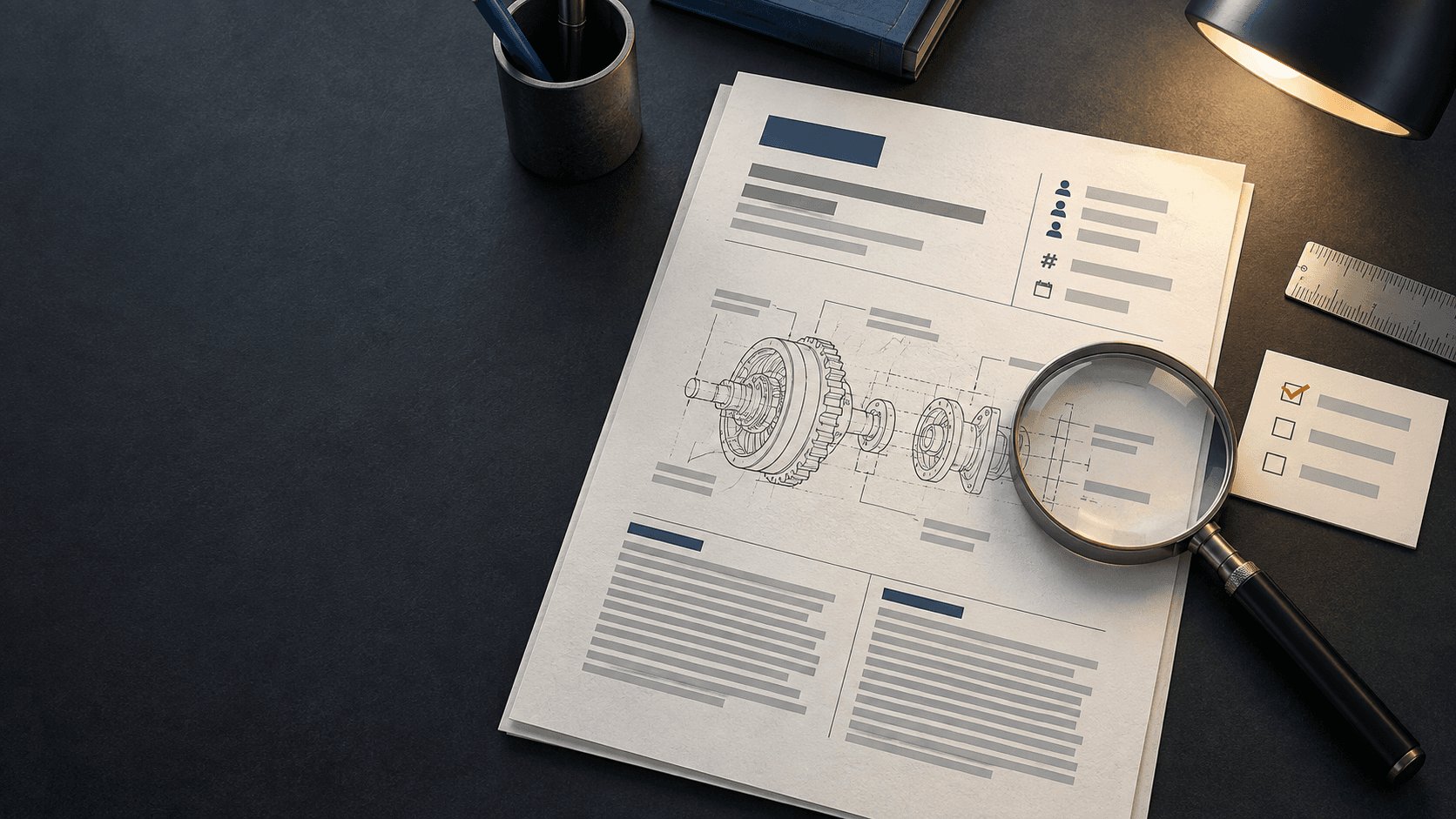
The page you find may show an application number, a publication number, a patent number, priority data, filing data, and more than one date. The USPTO Patent Public Search Basic accepts a patent or publication number for a quick lookup. Use that record to decide what you actually read or relied on before you open a citation template.
| Source object | Record clue | Citation decision |
|---|---|---|
| Issued patent | Patent number, kind code, and issue date | Use the issued patent pattern and its issue date. |
| Published application | Publication number with a year and kind code such as A1 | Use the patent application pattern and its publication date. |
| Application file | Serial number such as US12/503,708 | Use it to trace the file. Do not silently substitute it for a publication or grant number. |
Separate Inventors From the Assignee
The basic IEEE patent pattern begins with the inventor names, followed by the title in quotation marks. Keep the order shown by the patent record and reduce given names to initials in the reference. An assignee or applicant is useful when you are checking who filed or owns the record, yet it does not automatically replace the inventors at the front of the citation.
In the worked record, the public entry for US20110013726A1 lists Sorin P. Voinigescu, Alexander Tomkins, Magnus O. Wiklund, and William Warren Walker as inventors. It lists Fujitsu Ltd as the assignee. The reference therefore begins with the four inventors. Fujitsu remains important for record checking, yet it should not be inserted as though it were the author.
If a target journal or legal document asks for an applicant, assignee, or corporate author, follow that instruction separately. A bibliographic citation identifies the document. It does not settle ownership, infringement, validity, or legal status.
Read Patent Numbers and Dates Without Swapping Them
The USPTO describes a publication number as a four-digit year, a seven-digit sequence, and a two-character kind code. For example, US20110013726A1 identifies a U.S. published application. A grant can have a number such as US8861627B2. The application serial number US12/503,708 is a different identifier.
| Field in the public record | Worked value | What to do with it |
|---|---|---|
| Publication number | US20110013726A1 | Use it when you cite the published application. |
| Application number | US12/503,708 | Use it to locate the file and family history. |
| Inventors | S. P. Voinigescu, A. Tomkins, M. O. Wiklund, W. W. Walker | Use the names in the author position. |
| Assignee | Fujitsu Ltd | Keep it separate from the inventor list unless the receiving guide asks for it. |
| Filing and priority date | Jul. 15, 2009 | Keep it as record history. It is not automatically the citation date. |
| Publication date | Jan. 20, 2011 | Use it for the application publication entry. |
| Later grant | US8861627B2, Oct. 14, 2014 | Use the grant number and issue date when the issued patent is the source. |
The IEEE guide says to retain or request the day of the month for a patent and to use the issued date when several dates are given. A grant uses its issue date. A published application uses the publication date shown on its record. If the source gives only a month and year, keep that precision and do not invent a day.
Build and Check the IEEE Patent Reference
The IEEE Reference Guide gives a compact patent pattern. Use the country or patent office named by the record, keep the document number intact, and place the date that belongs to that document at the end of the core entry.
[n] J. K. Author, “Title of patent,” U.S. Patent 8 861 627 B2, Oct. 14, 2014.[n] J. K. Author, “Title of patent,” U.S. Patent Appl. 20110013726 A1, Jan. 20, 2011.[n] J. K. Author, “Title of patent,” Country Patent xxx, Abbrev. Month day, year.Issued patent example
[1] S. P. Voinigescu, A. Tomkins, M. O. Wiklund, and W. W. Walker, “Direct mm-wave m-ary quadrature amplitude modulation (QAM) modulator operating in saturated power mode,” U.S. Patent 8 861 627 B2, Oct. 14, 2014.
Application publication example
[2] S. P. Voinigescu, A. Tomkins, M. O. Wiklund, and W. W. Walker, “Direct mm-wave m-ary quadrature amplitude modulation (QAM) modulator operating in saturated power mode,” U.S. Patent Appl. 20110013726 A1, Jan. 20, 2011.
These are teaching examples. In your paper, assign the bracket number by first appearance and reuse it later. If the application publication supports one claim and the issued patent supports another, cite each document separately.
For a foreign document, retain its country or office identifier and follow the receiving publication's instructions. A U.S. number cannot stand in for an EP, WO, CN, or other patent document.
- DocumentDid you cite the grant, the published application, or the actual webpage you used?
- PeopleDo the inventor names and order match the record, with initials in the IEEE line?
- NumberDoes the country, patent or application label, number, and kind code match the document?
- DateDoes the date belong to the publication or issue event for the document you cited?
- ReviewDoes the finished line match the source record and the style instructions of the journal, conference, department, or instructor?
This site's Patent editor can format a checked record. Its current fields include Patent number and Issue date, which suit an issued-patent entry. It has no separate application-publication date or kind-code field, so keep those details beside the preview and review an application entry manually.
Have the patent record open?
Copy the inventor order, exact title, document number, kind code, and matching date. Then format the entry and check it against the source before you submit.
Open the Patent editorFAQ
Do I cite the patent application number?
Use the patent number for an issued patent or the publication number for a published application. The application serial number helps you find the file, yet it is not interchangeable with either document number.
Which date belongs in an IEEE patent citation?
Use the issue date for an issued patent and the publication date for a published application. When several dates appear, the IEEE guide points writers to the issued date for a patent. Check the target venue for house variations.
Should the assignee appear as the author?
The basic IEEE patent pattern leads with inventor names. Keep the assignee separate unless the receiving instructions ask for it or the assignee record is your source.
Can I cite a patent database page?
Cite the patent document when it supports your technical statement. Use the database or patent office page to verify fields and provide a stable route when the target style calls for a link. Cite the webpage itself only when it supports the claim.